Bologna’s Certosa: how to visit a cemetery as a place of memory and art

The Certosa asks for a different pace from Bologna’s busy central streets. It is a place where architecture, sculpture and private remembrance share the same ground. A thoughtful visit begins by recognising all three. You can be interested in an artist’s work while remembering that another visitor may be there for someone they loved.
Choose it because you want time with the city’s memory, rather than because you are collecting unusual attractions. Our guide to enjoying Bologna on a sensible budget argues for spending attention well; the Certosa rewards that approach particularly strongly. An unhurried route is more useful here than a contest to locate famous names.
Understand the change of purpose
Bologna’s official visitor guide explains that the cemetery opened in 1801 on the site of the former San Girolamo charterhouse, outside the city. Existing monastic spaces were adapted and the complex expanded with halls, galleries and monuments. Its celebrated nineteenth- and twentieth-century sculpture sits within that longer architectural history.
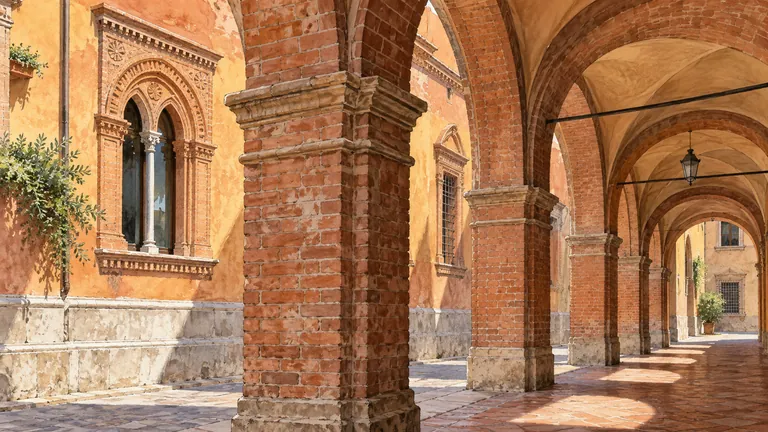
That is enough background to begin looking. As you move between a covered passage and a larger open space, ask how the setting shapes remembrance. Does a monument ask for intimate reading, command attention across a room, or share a rhythm with neighbouring memorials? You need not identify a style immediately to notice how carefully a visitor’s movement and gaze have been considered.
Read a monument without inventing a biography
Start with what is legible and visible from the permitted path. A name, date, sculpted figure or architectural frame may offer a starting point. Write down the distinction between a fact on the inscription and your response to the image. A bowed head may feel sorrowful to you, but that reaction alone does not establish the identity or life story of the figure represented.
Look at one detail, then return to the whole. A hand, a fold of clothing or the way a figure occupies space can reveal the sculptor’s choices. Avoid touching unless a specific accessible feature is explicitly intended for that purpose. Weathering and fragility are reasons to use your eyes with care, not invitations to test the surface.
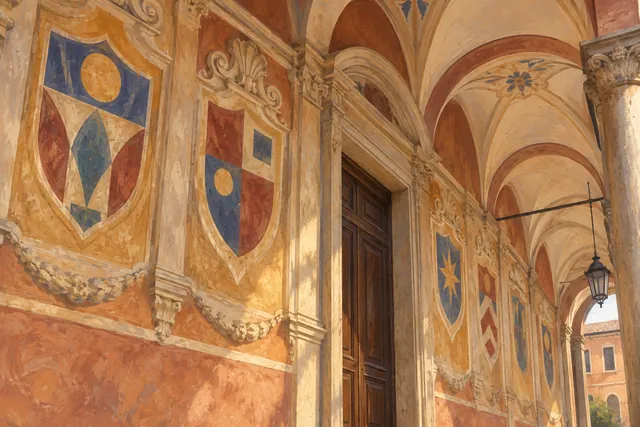
For another way of reading public identity, our article on Bologna’s coats of arms offers a useful comparison. Symbols gain meaning through context; they do not always behave like a universal picture dictionary.
Leave space for the cemetery’s everyday use
Keep conversations quiet and give funerals, maintenance work and people visiting graves plenty of space. If a route would take you through a private moment, choose another passage. Before photographing, check the current rules and consider what the photograph includes. A close view of a monument and an image of a grieving stranger are very different things.
Do not move flowers or personal objects for a cleaner composition. Avoid posing on tombs or turning a memorial into a prop. These are simple choices, but they determine whether cultural curiosity feels compatible with the purpose of the place.
Families can approach the visit honestly and gently. Explain that people remember others here, then invite children to notice shapes, materials and the difference between a courtyard and a corridor. There is no need to add ghost stories to make the setting interesting.
Choose a route you can comfortably finish
The official visitor information notes that not every area is readily accessible and identifies steps affecting some spaces. Check the current entrance, available routes and closing time before arrival, especially if mobility or wayfinding is a concern. A map and a small set of stops are more useful than wandering until the light begins to fade.
Our Bologna step-free planning questions help turn general assurances into practical details. If you are tempted to combine the cemetery with a longer outing, read the San Luca walk guide first and judge the total effort for everyone in your group. Nearby attractions do not automatically make an easy combined itinerary.
A guide can add context, if the date works
The municipality publishes an official 2026 Certosa programme running into November. Check the individual listing for language, meeting point, accessibility and reservation conditions; the existence of a programme does not guarantee an event on your chosen day. A focused guided visit can make a large site easier to read.
Explore our Bologna history experiences for other ways to place the city’s past in context. If Florence is part of your route, its Santa Croce guide continues the question of how art and remembrance occupy a living place. The aim at the Certosa is similar: notice carefully, make room for others, and leave with more understanding than you arrived with.
Sources & further reading
Turn a good read into a great day.
Find a highly rated Bolognese experience that brings these stories to life.
Explore related experiences →