Bologna’s Risorgimento Museum: how can small objects tell a national story?

A national history can feel remote when it arrives as a list of rulers, battles and dates. A small object changes the scale. Who kept this medal? What did a flag ask its viewers to believe? Why did a document survive when so many others did not? Bologna’s Museo civico del Risorgimento offers a setting for those questions, connecting the city’s experience with the larger changes that made modern Italy.
Know the span before choosing an object
The metropolitan city’s museum guide describes a collection founded in 1893 and covering Bologna’s history from the French Revolution to the First World War. It lists medals, flags, uniforms, prints, paintings and documentary material among the holdings. This is a broader period than the moment of national unification alone, and it involves many kinds of evidence.
Rather than trying to master that entire chronology before entering, choose one theme you can follow: how public events were remembered, how people represented their loyalties, or how a city related to the state. A theme gives you a reason to compare two objects instead of reading each label as an isolated fact. You can retain the larger sequence without expecting to remember every name.
Read a medal as a message with an audience
If a medal catches your attention, begin with what the label establishes: the date, maker where known, subject and purpose. Then inspect the design. Which side carries a portrait, an inscription or a symbolic image? Is the object commemorating something already past, rewarding an action or making a public claim? Similar-looking objects can have very different functions, so let the evidence determine the answer.
Imagine the difference between producing an object and preserving it. A medal’s original audience and the later museum audience are not identical. The first might have understood a face or phrase immediately; you may need a label to recover that context. Our article on Bologna’s coats of arms offers another way to consider public imagery without assuming that symbols explain themselves.
Let a document complicate the object beside it
A letter, printed notice or record can change the meaning of a display. Check who produced it, when and for whom. An instruction describes what someone wanted to happen; it does not automatically prove what happened afterward. A later recollection may preserve valuable experience while also reflecting the writer’s distance from the event. These distinctions make historical reading more lively, because disagreement and uncertainty become questions you can follow.
The museum’s Storia e Memoria di Bologna project provides a route into people, places and documentary connections beyond a brief visit. Note a precise name or reference to explore later instead of trying to photograph every case. Check whether an online record describes an object in the current display, something held elsewhere or a wider historical subject. Digital availability and physical exhibition are different forms of access.
Remember that a collection also has a history
Objects did not arrange themselves in a museum. People chose what to retain, donate, catalogue and display. Ask whether a label identifies a donor or explains how a piece entered the collection. A uniform may tell you about an individual wearer, while its later preservation tells another story about family or civic memory. Neither story needs to cancel the other.
This approach also prevents one exhibit from standing for everyone’s experience. A well-preserved possession may survive precisely because its owner had people and resources able to protect it. What voices are present in the display, and which questions would require other evidence? You need not solve those questions during a holiday visit. Recognizing them is already a more useful result than leaving with a single uncomplicated narrative.
Use the right address for the right purpose
The metropolitan guide locates the museum at Casa Carducci, Piazza Carducci 5, and the associated specialist library at Palazzo Galvani, Via de’ Musei 8. A visit to the museum does not amount to a research appointment at the library. Consult the municipal visitor information or contact the institution for current opening, admission and access arrangements; do not use an old exhibition leaflet as today’s timetable.
Our Casa Carducci article introduces the separate literary subject sharing this address, while the Certosa guide explores another setting for public remembrance. Allow each its own purpose rather than combining them as an automatic checklist.
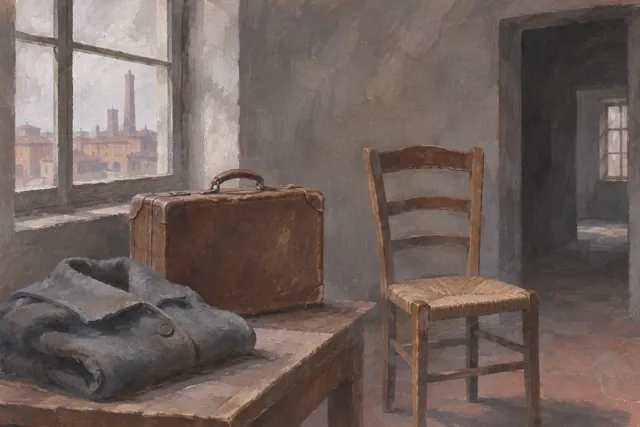
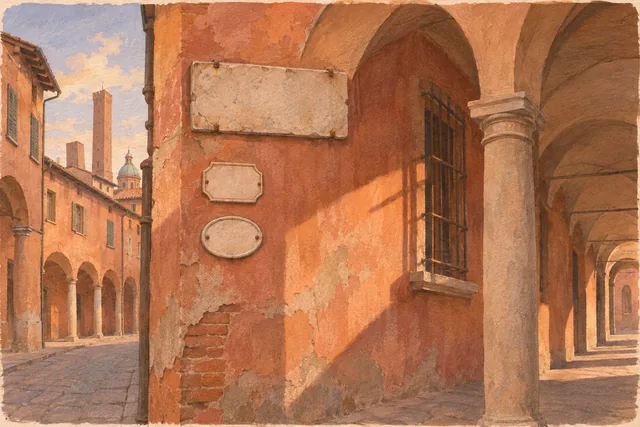
Browse the Bologna history collection for described guided activities. Travelers adding Turin can compare the wider Turin history collection without assuming that any general city tour includes a particular museum. The artwork here uses invented objects, not identified collection pieces. During the real visit, one carefully read medal and one document may give you a stronger connection with the past than a roomful of hurried glances.
Sources & further reading
Turn a good read into a great day.
Find a highly rated Bolognese experience that brings these stories to life.
Explore related experiences →