Bologna’s Museo della Specola: what do old instruments teach you about observing the sky?

An old telescope invites you to imagine putting an eye to the lens. In Bologna’s Museo della Specola, a more useful first question is what had to happen before an observation became knowledge. Somebody needed a position, an instrument, a way to measure or record, and a method for comparing results. The museum lets you approach those activities through objects. It is not automatically an opportunity to use a historic telescope or attend a nighttime observing session.
Let the instrument suggest an action
Look for the parts of an instrument that imply work: a mounting, a scale, an adjustment or a place where someone would read a measurement. Do not operate anything unless the museum explicitly offers an interactive element. Instead, ask what the object allowed an observer to do. Enlarging a view, establishing an angle and recording a time are different tasks, even when they contribute to the same investigation.
The university’s digital catalogue gives a useful sense of that variety, listing telescopes, astronomical quadrants, globes, clocks and illustrated observations among the Specola’s holdings. A catalogue describes a collection, not a guarantee that every listed object will be displayed during your visit. Use it to sharpen a question before arriving or follow up an object afterward, rather than planning a hunt for every entry.
Read a tower as a place of research
The university places the museum in the historic astronomical tower built in the early eighteenth century and inaugurated in 1727. Its current presentation traces instruments and observation across several centuries. That setting makes an interesting contrast with a tower whose principal story concerns defense or civic prestige. Height alone does not tell you what a building was for; its equipment, working practices and institutional history provide the explanation.
For context, our Bologna university-history guide and Palazzo Poggi introduction help connect this visit with the surrounding university quarter. The museums have related settings but separate access arrangements. Do not assume that buying one ticket grants unrestricted entry to every collection in the area, and check any advertised cross-museum benefit at the point of purchase.
Pay attention to the act of recording
A drawing or printed chart can be as revealing as a large instrument. Ask what its maker chose to emphasize and how the information is organized. Is the image intended to describe an observation, explain a system or help someone perform a task? The answer may require the caption. A beautiful image of the sky does not automatically have the same purpose as a measurement record.
Try comparing an instrument with an accompanying image or explanation. Which part of the process can each show, and what remains invisible? Patience, repeated work and disagreement are difficult to display in a case. Recognizing that limitation helps avoid the story in which a single clever object suddenly solves a whole scientific question. Museums can make processes approachable without making them simple.
Take the current entrance rules seriously
Checked on 21 October 2026, the Specola’s current university page specifies entry on the hour, a maximum of fifteen visitors at once and a stay of up to sixty minutes. Booking is strongly recommended, and visitors should arrive at the ticket office at least ten minutes before their selected time. These are the current published arrangements; older pages describing a different guided-only system should not replace them.
The tower has 272 steps. The university restricts access for people with reduced mobility and warns about the substantial demands of the climb. Read the full official accessibility information before deciding whether this visit suits your party. In rain or snow, the panoramic terrace is unavailable. Treat the museum’s instruments as the reason to go, with any permitted view as an additional part of the visit.
Keep your expectations tied to a real programme
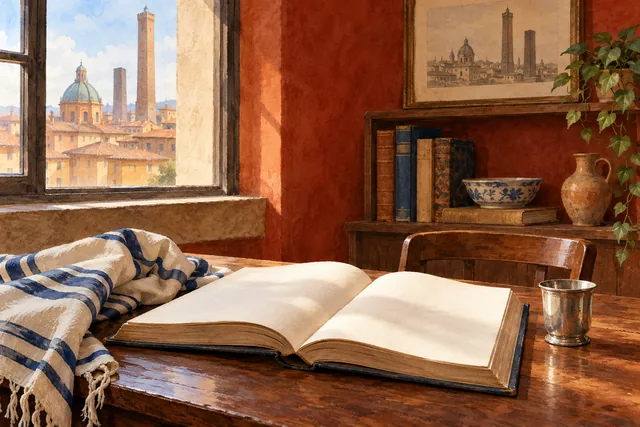
A standard museum visit is not a booking for live astronomical observation. If you want a talk, family activity or guided session, check the current autumn programme for the exact museum, date, age range and reservations. Do not use a photograph of a telescope beneath a dark sky as evidence of an evening opening. Our illustration is an interpretive image, not a depiction of a scheduled activity.
Bologna’s access-planning guide can help you choose another cultural stop if the climb is unsuitable. The Asinelli and Garisenda have their own continuing closure restrictions and are not interchangeable alternatives. For a different encounter with scientific collections, consider Florence’s La Specola museum guide—a similar name, but a different institution and subject. Compare Bologna history experiences by the route they actually promise. A focused hour spent asking how knowledge was made can leave more to discuss than a quick climb made only for the view.
Sources & further reading
Turn a good read into a great day.
Find a highly rated Bolognese experience that brings these stories to life.
Explore related experiences →