How do you plan a first visit to MAMbo in Bologna?
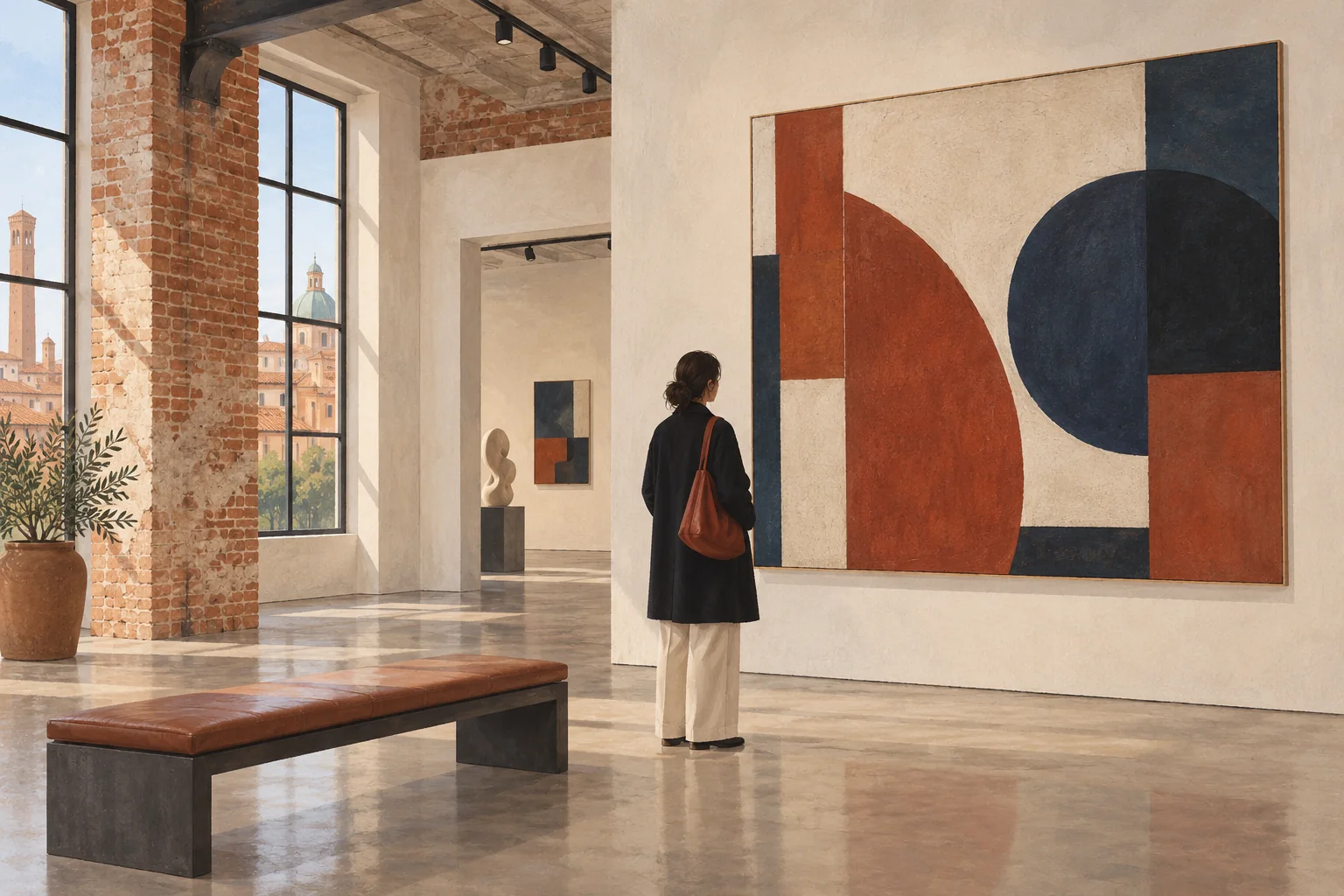
MAMbo offers a useful change of pace after Bologna’s churches, towers and porticoes. You enter a conversation about more recent art, where the questions may be as memorable as the objects. A good first visit does not require recognizing every artist. It requires choosing a manageable focus and giving a few works more than a passing glance.
The official Bologna Welcome museum profile places MAMbo in a former bakery at Via Don Minzoni 14 and describes its exploration of Italian art from the postwar period onward. That industrial setting is a useful first clue: the building belongs to the city’s changing uses, as well as housing works about change.
Decide which visit you are actually making
Distinguish the collection display, any temporary exhibition and the Museo Morandi arrangements before reserving. The tourism office’s current profile notes that MAMbo hosts the Morandi museum, but display layouts and individual works can change. Check the museum’s own current information for your date, especially if one exhibition or artist is the reason for going.
Write down your main purpose in one sentence. “I want to understand one unfamiliar art movement” produces a different visit from “I want to spend time with Morandi’s still lifes.” Both are reasonable. Trying to give equal attention to every available section can make an interesting museum feel like an endurance test.
If Bologna is one stop in a longer art-focused journey, use our national guide to enjoying Italian art without museum fatigue to vary the rhythm between cities. MAMbo can bring a different set of questions to a trip already rich in medieval and Renaissance collections; it does not need to compete with them for sheer volume.
Start by noticing what an artwork asks you to do
Some works invite a distant view; others reward close attention to material, repetition or a small change in scale. Begin at a comfortable distance, read the title and maker information, then look again. Ask what you noticed before reading and what the label changed. You do not have to agree with an interpretation for it to sharpen your observation.
If the work uses sound, moving images or a sequence of actions, decide whether you can give it the time it needs. A ten-second glance may be enough to recognize a familiar subject, but not to understand a time-based work. Look for information about duration and avoid assuming that the moment you arrived represents the whole piece.
Let a familiar object become unfamiliar
When looking at still life, resist the urge to finish at “bottles and bowls.” Notice how objects overlap, where the background meets the table and how small shifts in tone make a shape appear solid. Compare two works slowly if the current display allows it. Your task is to describe a difference, not to produce a correct answer for an imaginary examination.
This approach travels well outside the museum. Our guide to Bologna’s building materials asks similar questions about surface and structure. A museum afternoon can make you more attentive to the streets afterward, without claiming that a particular painting directly explains every red wall you encounter.
Use the building as a pause between works
Galleries are easier to enjoy when you occasionally stop looking at individual objects. Notice the room’s proportions, the distance between displays and the way light changes your attention. Take an available seat when you need one. A rest is part of looking well, not a failure to keep up.
For access requirements, consult the detailed information and contact the museum about the spaces you intend to use. Bologna Welcome describes lifts and different circulation arrangements rather than a single universal route. Temporary exhibitions can also affect the practical experience. Do not infer that one accessible entrance answers every question about upper floors, seating or sensory conditions.
Build the surrounding day at a compatible pace
Choose one nearby activity or an unhurried meal afterward rather than adding another major museum automatically. Our rainy-day Bologna guide helps you keep the outdoor connections realistic; a covered street network still includes crossings and exposed stretches. If this is your first full city day, use our first-day plan to decide which larger sightseeing ambition can wait.
Browse our arts and events experiences for bookable cultural options, checking the named venue and whether admission or guiding is included. A general city art tour does not necessarily enter MAMbo. If you visit independently, buy the actual museum option you need and keep its confirmation separate from other tour bookings.
Before leaving, choose one work you would like to think about again and record its title, artist and your own question. Follow the museum’s photography rules rather than assuming a phone is always welcome. A small accurate note gives you a better route back to the work than a gallery full of hurried images whose subjects you can no longer identify.
Sources & further reading
Turn a good read into a great day.
Find a highly rated Bolognese experience that brings these stories to life.
Explore related experiences →