Bologna’s crescentine and tigelle: what changes besides the name?

A basket arrives, the bread is warm, and two people at the table use different names for it. In the Bologna and Modena area, that need not mean anyone has ordered badly. Words travel across local food traditions, sometimes changing what they describe. For a visitor, the most useful distinction is practical: are you ordering airy fried pieces of dough or small round breads cooked against a hot surface?
Begin with the cooking method
The Bologna Apennines tourism account describes the Bolognese crescentina as a leavened, fried preparation, often cut into rectangles, squares or diamonds. Across the regional boundary toward Modena, the related fried food is commonly called gnocco fritto. The name on a menu is a clue, but the preparation and the explanation from the person serving it are more useful than a memorised rule.
Look for the contrast between an inflated, irregular fried surface and the flatter round form often sold as tigelle. Texture matters as much as shape. One may be a light envelope for an accompaniment; the other can be opened to hold a filling. You do not need to decide which is more authentic or more delicious before you have even tasted them.
Why does “tigella” have two lives?
Visit Modena explains that the round breads called crescentine in their local tradition are frequently listed on restaurant menus as tigelle. Historically, tigelle were the refractory stone or terracotta plates used to cook them. The name of the cooking equipment became a common name for the food. That is a useful piece of language history, not a reason to correct your waiter triumphantly.
The official Modena account also notes that the older cooking method survives in some mountain settings. Do not assume, however, that every restaurant uses those original plates. If you are interested in the process, ask how that kitchen prepares its breads. An honest modern method is more informative than a vague promise of an unchanged ancient recipe.
Read the whole menu line
A bread name rarely tells you everything about what arrives. Check whether the price refers to a basket, an individual portion, a mixed platter or a meal with accompaniments. Ask how many people a portion is intended to serve and whether you can add more later. This is especially useful if you also want pasta: a generous shared board can change the rest of the meal.
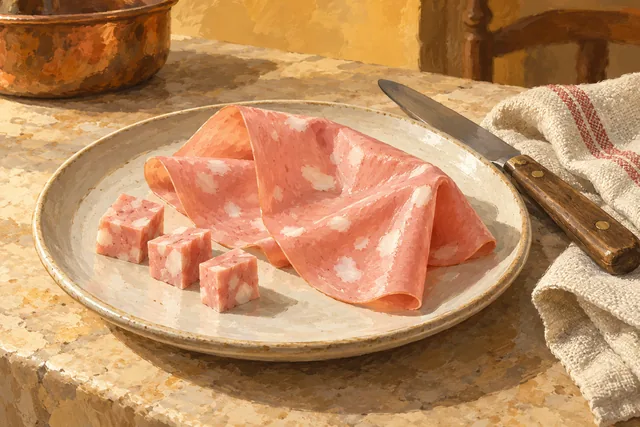
Do not assume that a photograph from another table describes your order. Cold meats, cheese and spreads may be separate choices or included in a particular combination. A clear question about the actual dish is more effective than trying to decode every regional menu variation before sitting down. The aim is a meal you enjoy, not a perfect performance of local expertise.
Ask about ingredients before the basket arrives
Recipes and frying practices vary. A bread-like appearance does not establish that a preparation is vegetarian, dairy-free or suitable for an allergy. Ask about the dough, the cooking fat and the accompaniments separately, and explain any requirement clearly. For an allergy, the kitchen also needs to address preparation and cross-contact; removing a topping at the table does not answer those questions.
This is another reason to avoid treating one published recipe as the universal definition. The Bologna tourism account explicitly recognises variation between places and households. You can appreciate a shared tradition while accepting that one kitchen’s ingredients differ from another’s. The operator serving your actual meal is the appropriate source for what is on your plate.
Taste a small comparison
If you order both preparations, try a plain bite before adding anything. Notice the contrast between surface and centre, then see what a modest filling changes. A very full piece can be enjoyable, but it may conceal the texture you were trying to compare. Warm food also changes as it cools, so a basket is best approached as part of the meal rather than a long photographic project.
With companions, compare concrete descriptions: crisp, soft, airy, dense or toasted. Different preferences are useful information. You do not have to turn the meal into a contest or accept the loudest person’s verdict. Asking which preparation you would order again can produce a more interesting conversation than declaring a single winner for the whole region.
Our Quadrilatero guide, mortadella article and Modena day-trip guide put the meal in a wider local context. Browse Bologna food experiences and check what is actually tasted or cooked. Florence’s schiacciata guide offers another example of a bread name worth understanding on its own terms. In Bologna, a question about cooking method often does more useful work than an argument about vocabulary.
Sources & further reading
Turn a good read into a great day.
Find a highly rated Bolognese experience that brings these stories to life.
Explore related experiences →