Fresh pasta in Bologna: what learning by hand teaches you

Watching someone make pasta can look wonderfully simple: flour, eggs, a wooden board and a rolling pin. Trying it yourself reveals how much knowledge lives in small decisions. When should the hands stop working? How does the sheet feel? Why does one part roll evenly while another resists? A Bologna class can make those questions as memorable as the meal.
This is not a substitute for your teacher’s recipe or a claim that every local kitchen works identically. Our introduction to Bologna’s pasta traditions explains several familiar dishes. Here, the focus is the experience of learning a skill and choosing a session that actually gives you time to practice.
See the sheet before the famous shape
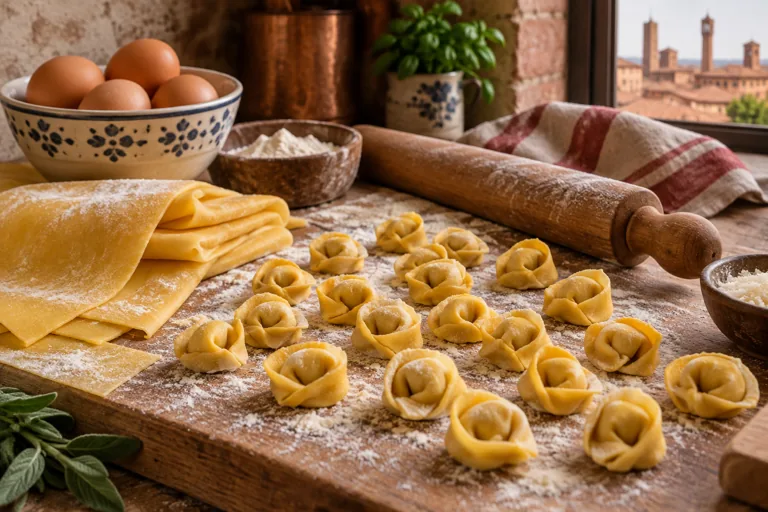
The municipality’s account of fresh pasta in Bologna places egg-pasta making within both domestic traditions and the city’s shops, restaurants and schools. It identifies the pasta sheet, or sfoglia, as the basis for a range of shapes. The familiar finished dish is only one stage of that story.
In a class, notice what happens before cutting or filling begins. Ask the teacher to describe the changes they are looking for as the dough is worked and rested. You may remember a texture or a useful visual cue more readily than an isolated instruction. A practical explanation helps you understand what to do when a future batch behaves differently.
Learn one movement carefully
It is easy to become distracted by the desire to produce a perfect plate. Give yourself a smaller task: learn how to hold the rolling pin comfortably, turn the sheet without tearing it, or repeat a fold with consistent pressure. Your first result does not need to look like a professional display to reveal something useful about the process.
Ask whether the session uses a long hand rolling pin, a pasta machine or both. None of those descriptions automatically makes a class better. They describe different experiences and levels of physical effort. If prolonged standing or repetitive hand movement is difficult, discuss seating and adaptations before paying rather than assuming that “suitable for everyone” answers every practical question.
Compare shapes through what they ask of you
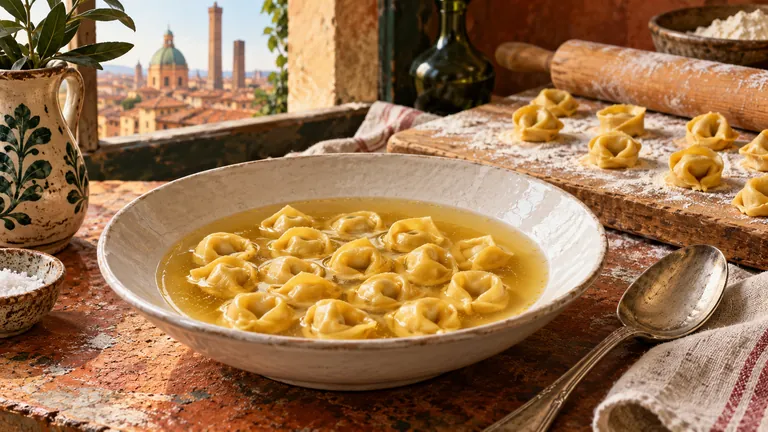
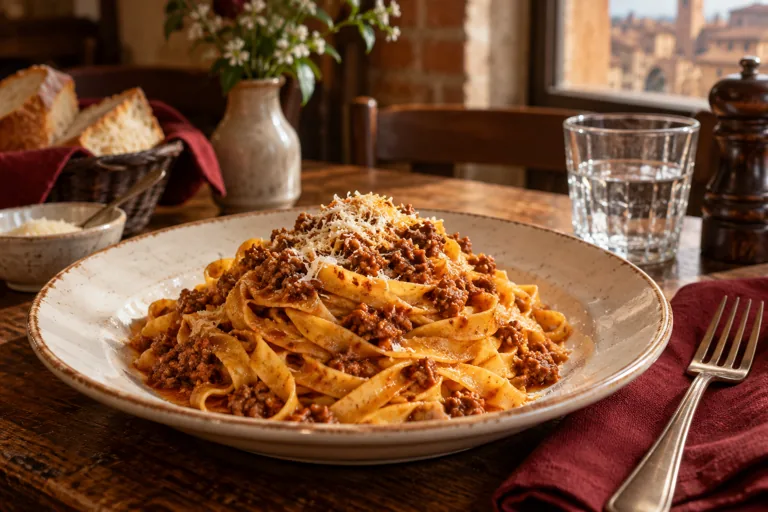
A ribbon asks for attention to cutting and separation; a filled shape introduces portioning, folding and sealing. The point is not to rank one as more authentic or more advanced. Notice how each stage changes the amount of handling and the way the dough meets its filling or sauce.
Our guide to ordering tortellini approaches the subject from the table. A lesson gives you a different viewpoint: you can ask why the teacher chooses a particular thickness or filling quantity and then see how that choice affects the next movement. Treat the answer as that teacher’s method unless they explain a wider documented convention.
Find out how much you will actually make
Read the itinerary for the balance between demonstration, individual practice and eating. A photograph of several bowls does not establish that every participant prepares each recipe. Ask whether people work independently or in pairs, whether dough is partly prepared in advance, and how much direct guidance is available.
Also check the number of dishes, the group size, the teaching language and the total time. A shorter demonstration may suit a tightly planned day; a longer practical session may suit someone who wants to repeat a technique. Our cooking-class comparison turns those differences into a useful booking checklist.
Make dietary requirements concrete
Explain allergies and dietary needs clearly before booking. Ask about the actual ingredients, shared equipment and what substitutions the operator can support. Do not assume that a meat-free filling makes the whole session suitable for every dietary requirement, or that a different flour can be introduced without changing the lesson.
For children, check the stated age rules and whether their role is active participation or accompaniment. Give the provider the actual ages rather than an adult headcount. Clarify whether drinks and the final meal are included, and plan the rest of the day accordingly. A food-focused experience is much more enjoyable when nobody arrives expecting a different amount of eating.
Take home a method, not a performance standard
Compare Bologna cooking and dining experiences once you know which format appeals to you. Read the exact option and cancellation terms, then check your date and party before booking with our Partners. Availability is not a reservation until the booking is completed.
If the teacher provides notes, add your own observations: a texture, a movement or the explanation that finally made sense. Ask permission before filming hands or other participants. The most useful souvenir may be the confidence to try again at home, with an understanding that practice produces improvement and occasionally a rather endearing, uneven ribbon of pasta.
Sources & further reading
Turn a good read into a great day.
Find a highly rated Bolognese experience that brings these stories to life.
Explore related experiences →