How should you order tortellini in Bologna?
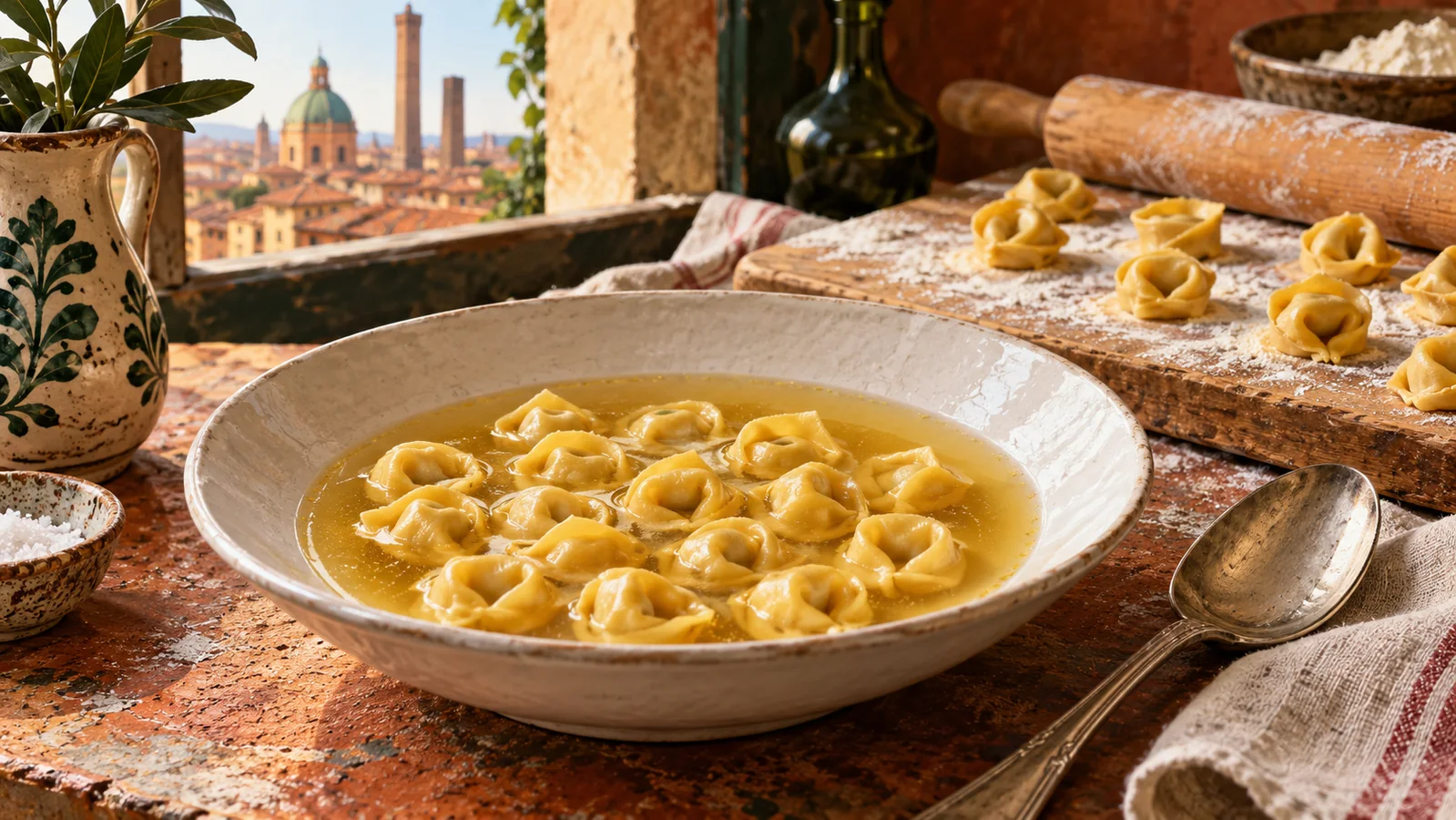
For a classic first encounter in Bologna, look for tortellini in brodo: small filled pasta served in broth. Read the menu, confirm the ingredients if they matter to you, and order a portion that suits your appetite. You do not need a theatrical command of Italian or a rigid procession of courses to enjoy the meal properly.
The useful distinction is between recognizing a local tradition and treating dinner as an etiquette examination. Restaurants make their own menus, and you can ask questions politely. Our introduction to Bologna's pasta covers the wider vocabulary; here, the focus is the moment you sit down and choose.
Know what the classic version contains
Bologna Welcome's published tortellini recipe describes a filling with pork loin, ham, mortadella, Parmigiano, eggs and nutmeg, wrapped in egg pasta and served in meat broth. It records the registration of the filling in 1974. That documented tradition is more useful than an argument over whose grandmother possesses the only legitimate fold.
The ingredient list also answers a practical question: classic tortellini are not a vegetarian dish. If you avoid particular meats, dairy, eggs or gluten, ask the restaurant about the exact preparation before ordering. Broth matters as much as filling. A different sauce does not make a meat-filled pasta suitable for a diet that excludes meat.
Say what you want, then listen to the answer
If the menu offers the dish, “tortellini in brodo, per favore” is a perfectly useful request. If you are unsure about the broth or the filling, ask in the language that lets you communicate clearly. There is no advantage in a beautifully pronounced sentence that fails to explain an allergy. Confirm what the kitchen can actually provide rather than relying on a general impression of the restaurant.
Menus may also list other preparations. You can choose those if they appeal; simply understand that you are making a different comparison from the classic broth version. Avoid asking the staff to defend an entire city's culinary history while they are serving a busy room. A short, specific question usually produces the most useful answer.
Choose a portion within the meal you want
Tortellini commonly appear among the first courses, but the menu is not a contract requiring you to order every course. Decide how hungry you are, what else you want to try and how much time you have. Ask whether sharing or a smaller portion is possible if that would suit the table; do not assume either is available.
For a food-focused day, it helps to keep the next stop flexible. A substantial lunch followed immediately by a full tasting tour can turn curiosity into a logistical problem. Our food tour or cooking class comparison helps you choose one main food experience instead of accidentally booking several meals on top of one another.
Look at the craft as well as the bowl
Before the first spoonful, notice the pasta's small scale and the way the fold encloses the filling. Then consider the balance between the pasta, filling and broth. Is the broth clear or richer in appearance? Does the pasta hold its shape? These are questions to enjoy at the table, not a scoring system for declaring a winner after one mouthful.
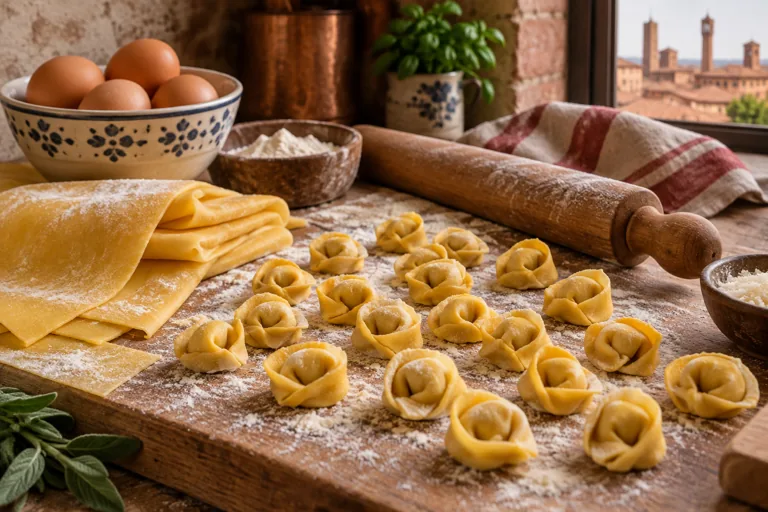
The Comune di Bologna's account of fresh pasta and sfoglia places the craft in homes, shops, restaurants and schools. That is a helpful reminder that the finished bowl represents work: mixing, rolling, cutting, filling and closing. Watching or learning some of that work can make a familiar dish feel newly interesting.
Learn without assuming every class makes tortellini
If folding the pasta appeals, compare our Bologna dining and cooking experiences. Read the menu of the actual class. A fresh-pasta workshop may teach different shapes, and a tasting walk may discuss tortellini without including a bowl. Confirm the dishes, language, group format and dietary arrangements before booking.
Our cooking-class guide suggests questions about participation and the meal afterward. You may prefer a class where everyone works individually, or one where a group makes a shared meal. Neither description alone tells you how much time will be spent folding the particular pasta you came to learn.
Let the next city taste different
If you are continuing to Milan, compare this meal with our sibling guide to the Milanese table. Regional differences are part of the pleasure of traveling in Italy. You do not need to search for the same dish at every stop to keep the trip consistent.
In Bologna, order clearly, ask about ingredients, and allow enough time to eat while the dish is at its best. The memorable part may be the broth, the small fold or the conversation that follows. A little knowledge helps you notice those things; it should make the meal more relaxed, not more difficult.
Sources & further reading
Turn a good read into a great day.
Find a highly rated Bolognese experience that brings these stories to life.
Explore related experiences →