Mortadella Bologna IGP: what should you notice before the first bite?

Mortadella can arrive as a delicate fold in a sandwich, a small cube at a tasting or an ingredient in a more elaborate dish. In Bologna, it is tempting to recognize the familiar pink color and move straight to eating. A brief pause before the first bite can add something more useful than a list of famous foods: an understanding of what the name tells you, what the cut changes and what you still need to ask.
The consortium’s Mortadella Bologna information explains the protected product and its production specification. The letters IGP identify a geographical indication. They are worth reading as part of a defined product name, rather than as a general compliment attached to anything that looks or tastes similar.
Start with the actual label
Ask which product is being served and, where practical, look at the label. The consortium’s label-oversight guidance identifies the protected denomination and the European indication mark among the information that helps distinguish the product. A decorative image of Bologna or an appealing counter display is not a substitute for that identification.
The specified production area extends beyond the city of Bologna. This is an important corrective to a common travel assumption: buying a food in the city named on its label does not establish that the particular item was produced within the city boundary. If the producer’s location interests you, ask that question separately and keep the answer distinct from the protected denomination.
Look at the structure of a slice
The consortium’s production description explains finely ground pork combined with the characteristic cubes of fat, followed by slow cooking and cooling. Those visible pale pieces are therefore part of the product’s structure, not a reason to invent a story about how a particular batch was made.
Observe the slice before adding bread, cheese or a condiment. Notice how it bends, where the pale pieces sit and how the surface catches the light. This is an invitation to pay attention, not an examination with a correct answer. You do not need specialist vocabulary to describe a texture clearly to someone sharing the tasting.
Compare the cut without ranking the meal
The consortium describes both thin slices and other formats, including cubes. If a tasting offers more than one cut, try them separately. A thin fold and a cube give you different proportions of surface and interior in each mouthful. Your impression may change even when the underlying product is the same.
That comparison can be more revealing than immediately deciding which restaurant has the “best” version. Keep the portion modest enough to remain curious, and ask whether the cuts are from the same product before treating the difference as an experiment. Our Quadrilatero guide encourages this kind of focused conversation with a seller.
Ask about the plate in front of you
A recognizable food name does not answer every ingredient question. If pistachios, other ingredients or cross-contact matter to your party, ask about the exact product and preparation being served. Do not infer the answer from a photograph, a previous tasting or the absence of a visible ingredient in one slice.
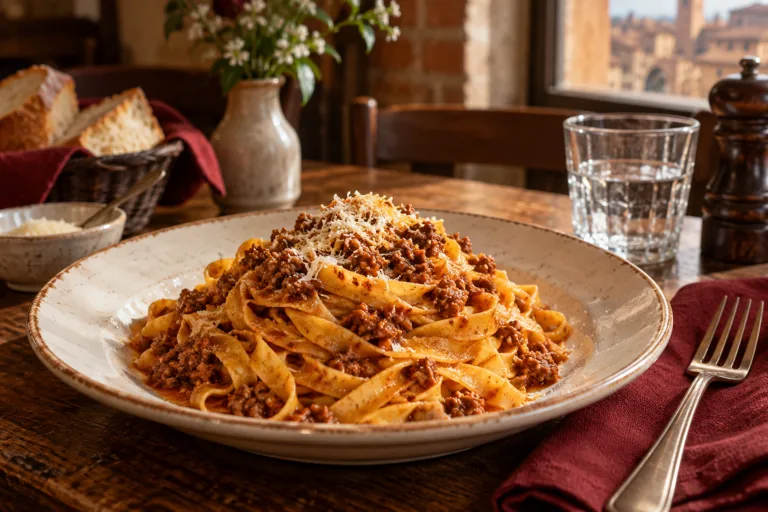
The same precision applies when mortadella appears inside another dish. Our introduction to Bologna’s pasta traditions is a starting point for understanding different preparations, not a guarantee that every kitchen follows one formula. A menu conversation should be specific enough to be useful without turning into a demand that the cook confirm a story you brought with you.
Choose a tasting format that matches your curiosity
If you want to compare products and hear their background, a clearly described food walk may suit you. If your interest is making a dish, inspect the actual class curriculum. A mortadella tasting does not by itself mean you will learn its production process, and a cooking class may use the ingredient without teaching how the product is made.
Our guide to food tours and cooking classes helps separate those purposes. For a regional comparison, a Provolone del Monaco tasting near Sorrento raises similar questions about names and particular producers while involving a very different food.
Browse the Bologna dining collection for actual inclusions, then leave space for a simple encounter at the counter. Read the name, ask one good question and taste attentively. A small portion can carry a surprisingly detailed conversation when you know which details are evidence and which are simply your own preferences.
Sources & further reading
Turn a good read into a great day.
Find a highly rated Bolognese experience that brings these stories to life.
Explore related experiences →