Bologna’s Palazzo Pepoli: how does a museum tell a city’s story?

A city museum faces an impossible-sounding task: fitting centuries of lives, arguments, buildings and everyday routines into rooms that a visitor can cross in an afternoon. Palazzo Pepoli’s Museum of the History of Bologna makes that challenge worth considering. The most rewarding visit begins with a question of your own, rather than the ambition to remember every date on the walls.
Bologna Welcome’s museum introduction describes a narrative reaching from Etruscan Felsina to the present, using different forms of display. That breadth is an invitation to select, compare and return. You are meeting an interpretation of the city’s history, not opening a box that contains all of it in equal detail.
Choose one question before entering
Ask something that can follow you through several periods. How did people move through Bologna? How did learning affect the city? What happens when water becomes an urban resource? A question gives apparently unrelated material a relationship without requiring every room to provide a neat answer. It also makes it easier to pause when you find evidence that complicates your first assumption.
Our introduction to Bologna’s university story may help frame one route, while the guide to the city’s canals suggests another. Read them as preparation for looking, not as a checklist of objects guaranteed to appear in the museum. Current displays and interpretive emphasis can change.
Ask what kind of evidence you are seeing
An original object, a modern map and a multimedia presentation can each teach something, but they do different jobs. Look for the label that explains what is historic and what has been made to help you understand it. A reconstruction may make a vanished place easier to imagine while still depending on choices about which evidence to emphasize.
When a display feels especially convincing, ask why. Is it the scale, the lighting, the voice of a narrator or the authority of a date? Enjoy the presentation while keeping that question open. Museum design is part of the experience. Noticing it does not require distrust; it helps you separate the source material from the way its story is being told.
Leave room for people outside the headline
City histories naturally gather around famous figures and major events. Alongside those, look for traces of ordinary work, movement and domestic life. A small item can prompt questions about who used it, who made it and whose experiences survive less clearly. You may not find all the answers in one label, but the question changes how you read the larger narrative.
With a companion, choose different details to remember. One person might follow buildings while another notices occupations or images of public gatherings. Compare your impressions over a break afterward. Discovering that you experienced different versions of the same route is often more illuminating than agreeing that the museum was simply “interesting.”
Connect one museum question to the streets
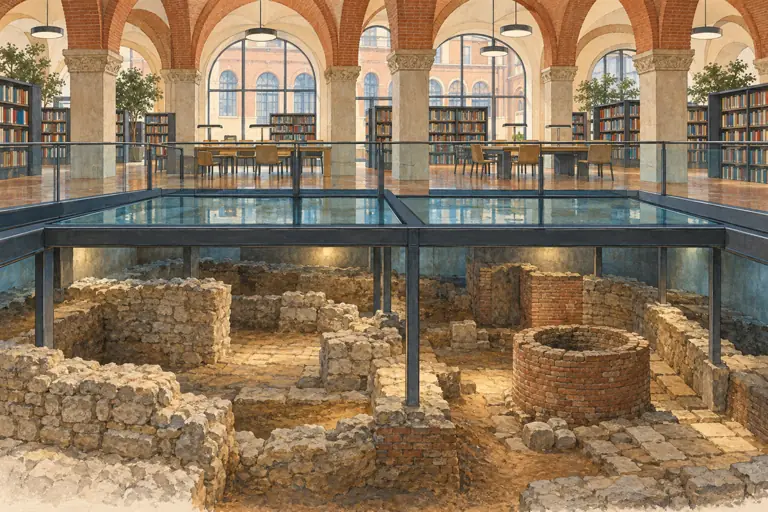
After the visit, choose one modest continuation outside. The archaeology beneath Salaborsa offers a different setting in which the modern city and older material meet, with its own visitor arrangements. Do not try to combine every possible connection immediately. One comparison made carefully is more useful than a breathless sequence of historical stops.
If your Italian trip includes Campania, Naples’ layered urban history raises related questions in a very different city. The comparison is about how places preserve and present change; it is not a claim that their development followed the same path. Let differences sharpen your attention instead of smoothing them away.
Confirm the precise visit you are booking
Use Palazzo Pepoli’s official website to check current exhibitions, museum admission and events at the Via Castiglione venue. Access to the palazzo or its covered public space should not be assumed to include the paid museum route. Read the full venue name carefully, especially when comparing similarly named Bologna palaces or a listing that mentions only an exterior stop.
Ask about the actual route if floor surfaces, ramps or seating affect your visit. Allow enough time to pause without letting a timed commitment elsewhere dominate your attention. Our Bologna history collection offers guided possibilities, each with its own named stops and inclusions. A successful afternoon does not require mastering the whole city. It may be enough to leave with one familiar street looking a little less obvious.
Sources & further reading
Turn a good read into a great day.
Find a highly rated Bolognese experience that brings these stories to life.
Explore related experiences →