How do you choose a Bologna cooking class?
The most useful cooking class is the one that matches how you learn. Some travelers want a relaxed meal with a little participation. Others want to practice a technique until they understand it. Both can be enjoyable, but confusing them is a common route to disappointment. Read a class description as a description of your afternoon, not just a photograph of the meal at the end.
Decide what you want to do yourself
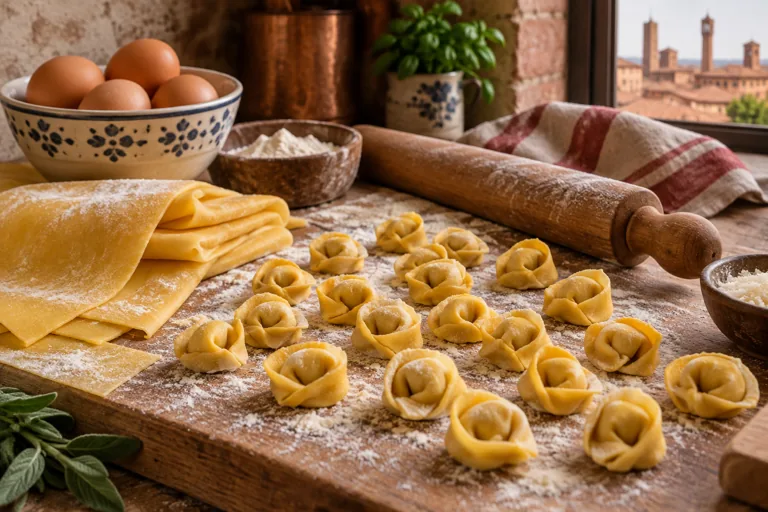
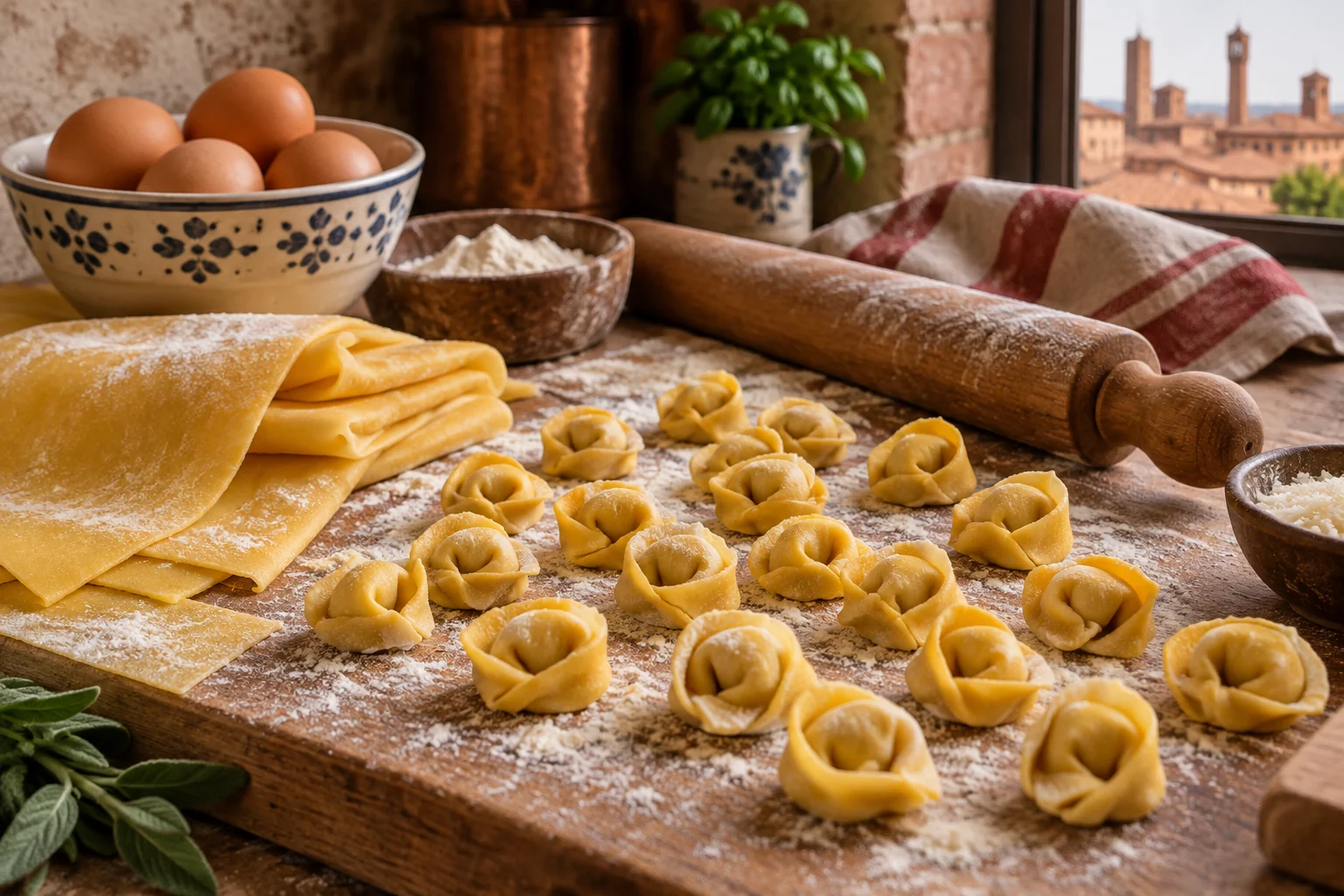
Look for clear language about hands-on work. Preparing dough, watching a demonstration and assembling a finished dish are different activities. A host may sensibly prepare some components in advance, especially when they need long cooking or resting time. What matters is that the division between demonstration and participation matches your expectations.
If a particular skill is the reason you are booking, ask directly whether you will practice it. Wanting to learn to roll pasta by hand is a more useful statement than wanting an authentic experience. It gives the operator something concrete to answer. Our introduction to Bologna’s pasta can help you identify whether you are most interested in ribbons, filled shapes or the relationship between pasta and sauce.
Compare the setting without romantic shortcuts
A home kitchen can feel intimate; a teaching studio may provide generous work surfaces; a restaurant setting may reveal a different working rhythm. These are practical differences rather than a hierarchy of legitimacy. Consider the number of participants, available seating and how easily the instructor can see what you are doing.
Ask about stairs and standing time when relevant. A charming location does not tell you whether the space suits your group’s access needs. Likewise, a class described as small may still have several people sharing a station. If personal instruction matters to you, compare the maximum group size and the actual working arrangement before choosing a date.
Read the complete menu
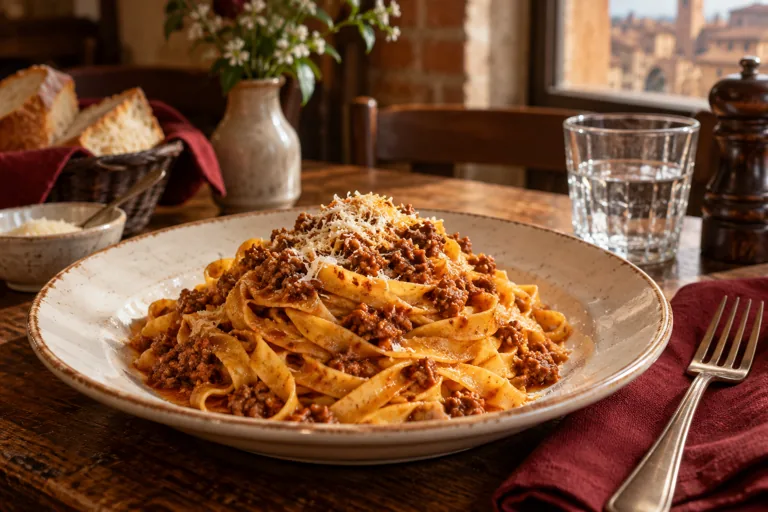
A headline dish can hide important details. Check whether the class includes a starter, dessert, drinks and a meal afterward, and whether the menu changes with the session. Do not assume that every pasta class makes the same shapes. The official food guide shows how broad the local repertoire is; one lesson can only explore a small part of it.
For dietary requirements, contact the operator before paying. Ask what can be changed and what cannot, including shared equipment and preparation areas where relevant. A substitution may alter the lesson as well as the meal. Written confirmation is more useful than hoping the host can improvise on arrival, especially when a group has several different needs.
Give the lesson room in your itinerary
Check the address and travel time from your accommodation. A class marketed under Bologna may take place beyond the streets you planned to explore that morning. Confirm whether transport is included or whether you must arrive independently. Add a buffer for finding the entrance, introductions and the ordinary business of settling into a new space.
Leave the period afterward flexible. You may finish pleasantly full and ready for a quiet walk rather than another major meal or demanding appointment. Our day-planning guide can help you make the lesson the centre of the day. If you mainly want to sample several businesses and hear their stories, a food tour may fit better than a class.
Take home a method, not just a photograph
During the lesson, pay attention to the instructor’s corrections. The useful memory may be how the dough felt when it was ready, how much filling was enough, or why a fold failed. Ask whether recipes or notes are supplied, and write down the details you are likely to forget. Photographing every stage can sometimes distract from the movements you came to learn.
When comparing available cooking experiences, use traveler reviews to look for patterns around teaching, participation and organization rather than treating the score as a complete answer. A high rating helps identify a promising option; your own questions determine whether it is right for you. A well-chosen class should leave you with a good meal, a clearer understanding and the confidence to make a slightly floury mess at home.
Sources & further reading
Turn a good read into a great day.
Find a highly rated Bolognese experience that brings these stories to life.
Explore related experiences →