What makes a Bologna portico part of the UNESCO property?
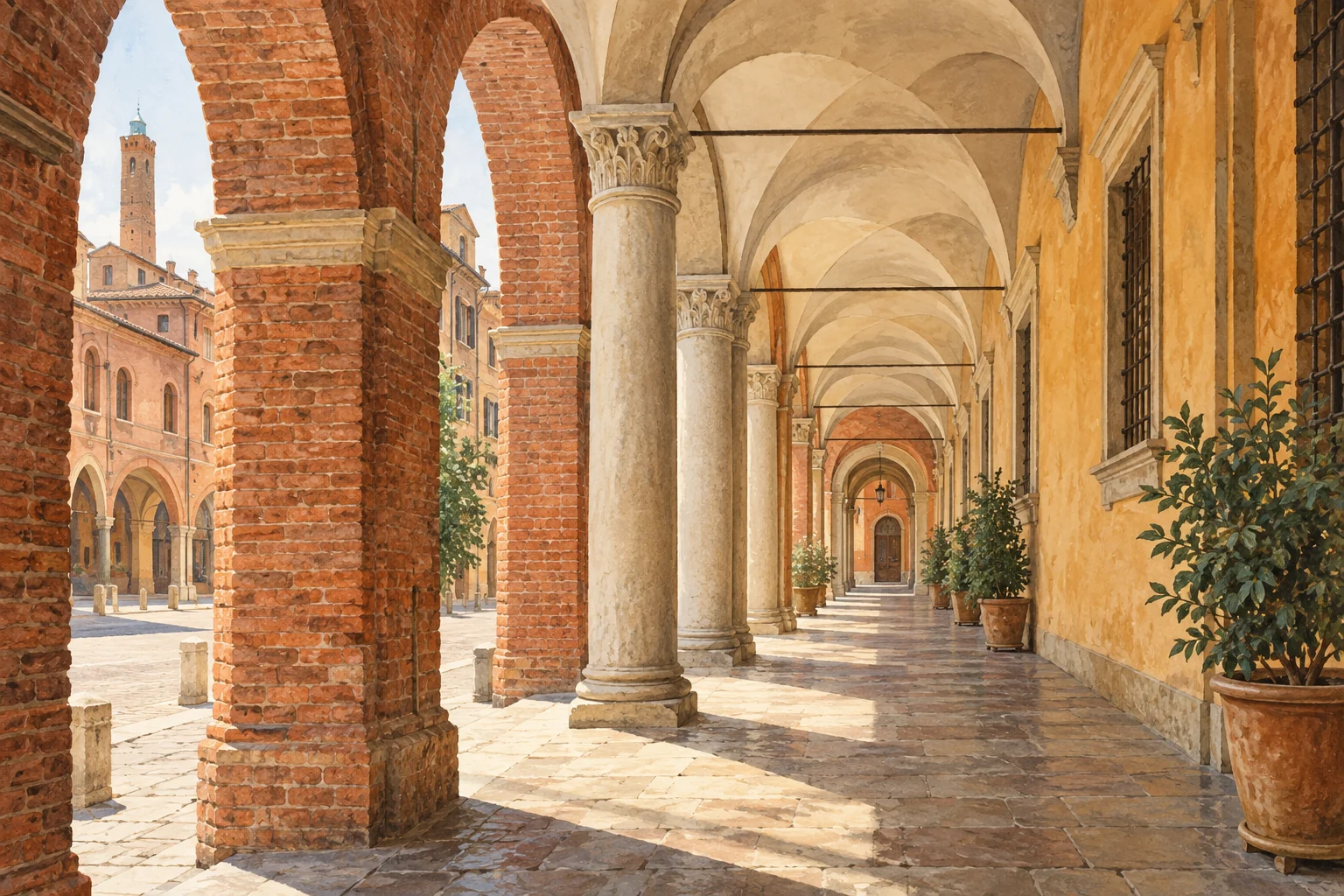
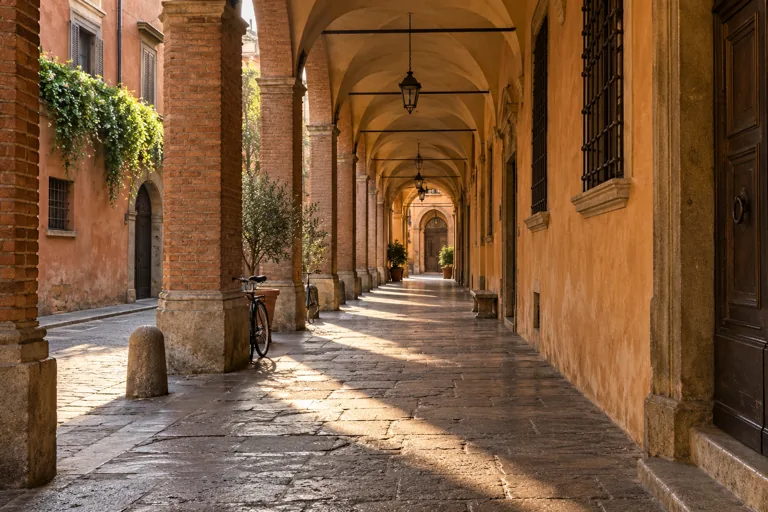
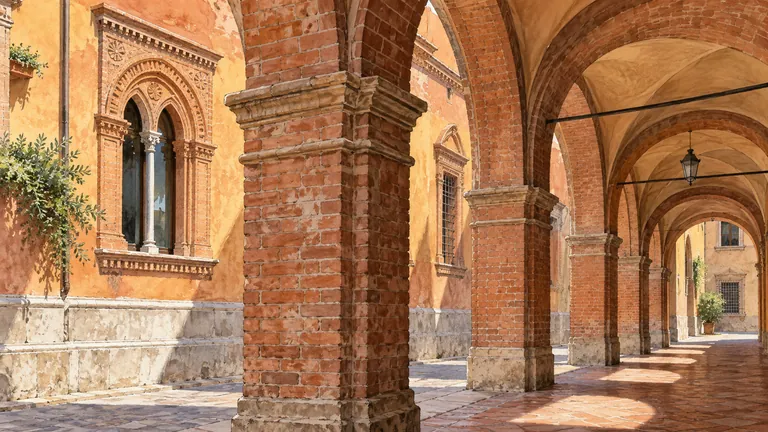
A covered walkway in Bologna can be beautiful, useful and historically interesting without belonging to the precise boundaries of its World Heritage property. That distinction is the starting point for understanding the UNESCO inscription. The recognized property is a selection of portico ensembles and their settings, not a blanket label attached separately to every arch in the city. Once you know this, visiting becomes less about collecting a symbol and more about comparing different ways that architecture supports daily life.
Think of a collection of places
The UNESCO World Heritage entry identifies twelve component parts and records inscription in 2021 under criterion (iv). Together, they show the development of a building type across different historical periods and urban uses. Some belong to central civic or religious settings; others demonstrate how covered space continued to evolve beyond the familiar historic core. The property is therefore a connected argument about architecture, rather than one continuous monument.
The word component can sound bureaucratic, but it is helpful on the ground. Imagine choosing a set of examples for a thoughtful exhibition. You would want each example to add something, rather than merely repeat the previous one. A visitor can apply that idea without mastering the nomination documents: choose two contrasting places and ask what the second helps you understand that the first did not.
Use the official names to plan accurately
Bologna Welcome’s official porticoes overview lists the recognized areas. They include Santo Stefano and Mercanzia; Pavaglione, Banchi and Piazza Maggiore; San Luca; the University and Academy; and other components beyond this short central sample. The names refer to ensembles, so an attractive nearby arcade should not automatically be treated as part of the same designated area. Consult the official property information if the exact boundary matters to your visit or research.
For a first outing, a central pair is usually more manageable than an attempt to visit all twelve. Our walk from Piazza Maggiore toward Santo Stefano gives you a way to compare changes of scale and setting. It is a visitor route, not a claim that every metre along it lies inside the inscribed property. That small distinction keeps an enjoyable walk geographically honest.
Look at the surroundings, not only the columns
UNESCO’s account emphasizes the relationship between porticoes and the built areas around them, along with their public use and social function. The supports and roofs are important, but so are the activities and routes they accommodate. This is why isolating one handsome capital in a photograph tells only part of the story. The space beside it may explain just as much.
Try a three-part observation. First, notice what the portico connects: a square, several entrances, shops or a longer path. Next, watch how people use it without photographing them closely. Finally, compare the change between covered space and open air. Does the roof encourage stopping? Does a narrow section require people to negotiate passage? You are looking at a working arrangement, not simply an attractive frame.
Choose contrast rather than maximum distance
The city’s architecture-led introduction to the UNESCO porticoes suggests looking at different historical forms, including the monumental civic setting around Piazza Maggiore and the distinct supports around Santo Stefano. Use those prompts to sharpen your eye. You need not reproduce the full suggested tour or memorize each stylistic term to benefit from a comparison.
If a longer walk interests you, consider it as a separate outing. Our San Luca planning guide explains why an extended uphill route deserves its own decision about energy, weather and return transport. A roof does not remove gradients or make the whole route equally accessible. Choosing fewer components carefully is often more rewarding than arriving at several while exhausted.
Recognition is not an admission package
Do not assume that a World Heritage label gives access to every building behind the walkway. A church, museum, university room or private doorway can have its own rules. Keep the public route and any interior visit as separate planning questions. Check current arrangements for the specific place you want to enter, and respect barriers or temporary works even when a printed map shows an otherwise continuous passage.
A guide can be especially useful here because the value is in interpretation. Compare the porticoes and landmarks collection for routes that explain differences among buildings, rather than promising a vague list of highlights. Ask whether the emphasis is architecture, general city history or a food walk through covered streets. All can be enjoyable; they answer different questions.
Finish by looking back at an ordinary stretch you passed earlier. Our broader article on why Bologna developed so many porticoes supplies the citywide background. The UNESCO selection adds another layer: it helps explain which examples together make a larger historical case. You can appreciate that selection while continuing to enjoy the many other covered spaces that make Bologna such a satisfying city to explore on foot.
If your itinerary continues to Milan, compare this street-based way of looking with a walk through Brera’s streets and courtyards. The useful connection is a method of observation: look at entrances, everyday movement and the relationship between public routes and institutions. It is not a claim that the two districts share the same history or heritage designation.
Sources & further reading
Turn a good read into a great day.
Find a highly rated Bolognese experience that brings these stories to life.
Explore related experiences →